

The Cult of the Dead in Ghana: Coffin Art as a Celebration of Life
The Origins of Ghanaian Coffin Art
The tradition of creating unusual coffins did not begin until the mid-20th century. In the 1950s, a carpenter named Seth Kane Kwei from Teshie, a small suburb of Accra, is said to have crafted the first imaginative coffin. He built a coffin in the shape of an airplane—not for a pilot, but for his grandmother, who had wished to take a flight during her lifetime but was never able to do so. The airplane coffin became a symbol of a dream fulfilled.
The idea spread quickly. Relatives began commissioning coffins that reflected the professions, passions, or lifestyles of the deceased. Thus, a tradition and funeral culture emerged that is not only an expression of creativity but also a testament to the pride in the individuality of life.
Coffins that tell stories
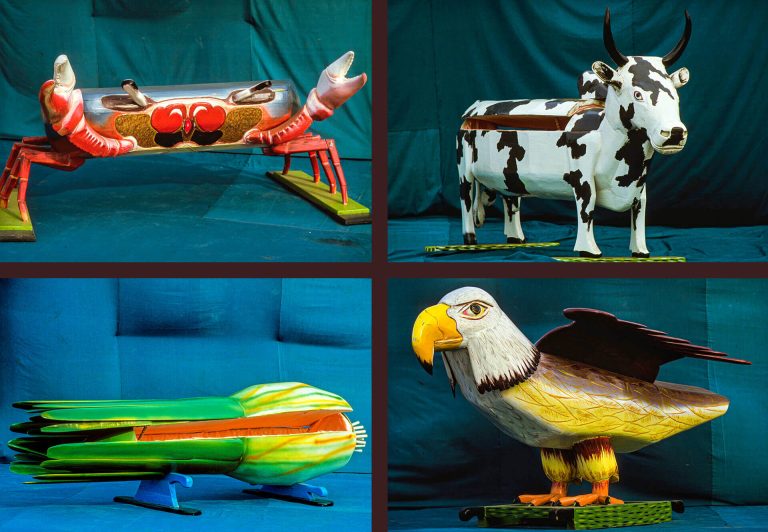
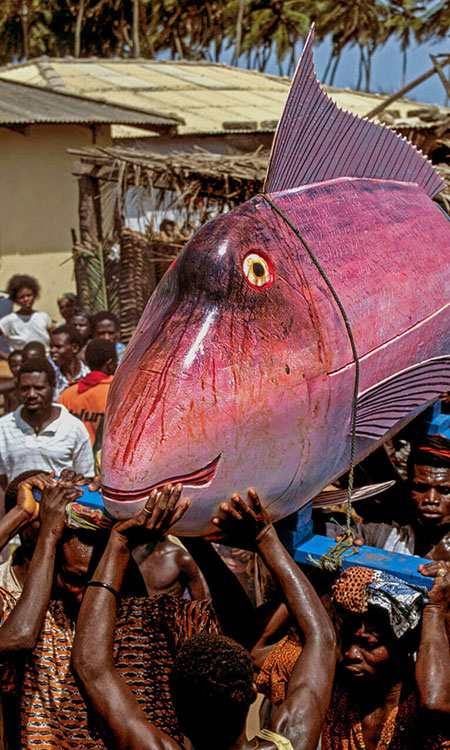
Every coffin in Ghanaian coffin art is unique. Some are spectacular in their attention to detail, while others are whimsical or humorous. A fisherman is buried in a coffin shaped like a giant fish, a cocoa farmer in a cocoa pod. A successful businessman might receive a coffin shaped like a luxury car, while a barber finds his final resting place in an oversized pair of hair clippers.
These coffins are more than mere containers. They are messages that tell the story of the deceased’s life, reflect their identity, and communicate to the community who this person was. They express pride, a sense of belonging, and the belief that death is not the end, but merely a transition.
The cultural context: Death as part of life
In the Ga culture of Ghana, death is not viewed as the end of life. Rather, it is seen as a transition to another form of existence, in which the deceased remain part of the community as ancestors. A funeral is therefore not merely a farewell, but also a celebration that honors the life of the deceased and marks their return to the spiritual world.
In this context, the fantasy coffins are an expression of optimism and creativity. They show that even in death, there is room for humor, individuality, and a zest for life. The coffins are often colorfully designed, featuring vibrant hues and intricate ornamentation that emphasize the festive nature of the occasion.
Craftsmanship and Tradition
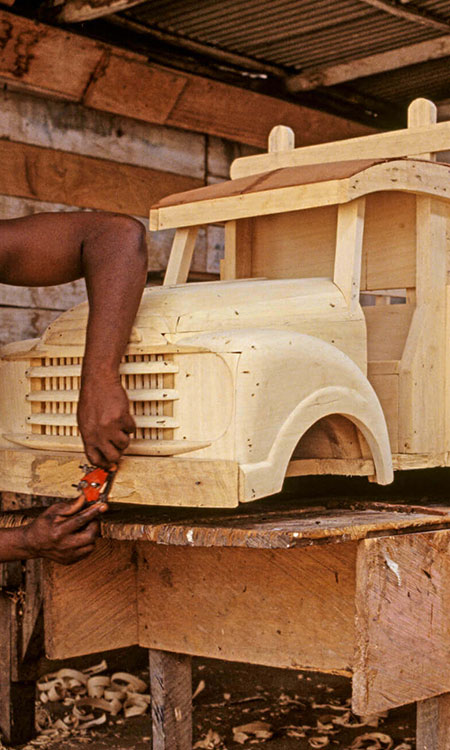
Behind each of these coffins lies the work of skilled craftsmen. The carpenters and artists who create these works of art combine traditional woodworking techniques with modern design. The process begins with discussions between the family and the artist to understand the personality and wishes of the deceased. The coffin is then crafted with great care.
The craftsmanship requires a high degree of precision and creativity. Every detail must be just right, from the materials and color choices to the shape. It is work that demands not only technical skill but also artistic sensitivity. The coffins are so rich in detail that they sometimes appear like oversized sculptures.
Humor in the Face of Death
One fascinating aspect of Ghanaian coffin art is the humor reflected in the designs. This humor is not an expression of disrespect, but rather shows that the community does not fear death. It is a part of life, and even in the face of death, there is still room for laughter and lightheartedness.
Some coffins are deliberately designed with a touch of whimsy. A man known for his hearty appetite might be buried in a coffin shaped like a giant chicken. Another example is a coffin shaped like a beer bottle for a bar owner. These depictions are not only humorous but also a loving farewell that highlights the individual quirks of the deceased.
Coffin Art and Globalization
In recent decades, Ghanaian coffin art has garnered international attention. Museums and galleries around the world have exhibited these works, including the British Museum in London and the Centre Pompidou in Paris. The coffins are celebrated not only as artifacts of a vibrant funeral culture but also as modern works of art.
This recognition has opened up new opportunities for artists to make their work accessible to a wider audience. At the same time, however, it raises the question of whether the commercialization of this art form jeopardizes its original meaning. While artists welcome the growing demand, others warn that the coffins could be misunderstood as exotic curiosities rather than as an expression of a rapidly taking root new funeral culture.

Conclusion: A living tradition
Ghana’s coffin art is far more than a whimsical curiosity. It is a profound expression of culture, community, and the ability to celebrate life in all its facets—even in the face of death. These coffins tell stories, they honor life, and they show that death is not an end, but a transition to another form of existence.
By bidding farewell to the deceased in this unique way, the bereaved give mourning a creative and festive dimension. It is a ritual that places life at the center and emphasizes the enduring nature of love, memory, and community. The imaginative coffins from Ghana are not only impressive works of art but also a celebration of life that inspires us all.
Verwandte Beiträge
From ashes to light: Don Lanfranco Casali’s Memorial Diamond has …
Eternal Love: The Taj Mahal – A Monument to the …
The Significance of Funeral Rituals The Significance of Funeral Rituals …
The grieving process: stages and coping strategies Grief is a …