

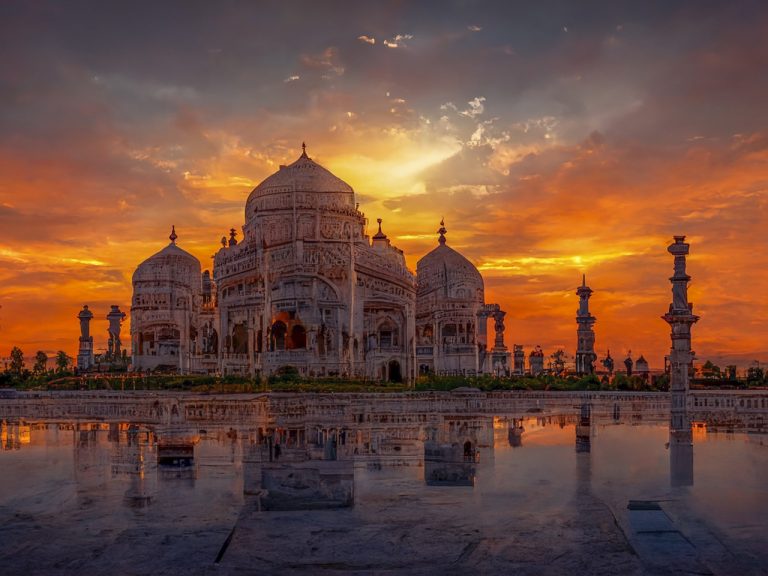
Eternal Love: The Taj Mahal – A Monument to the Heart
There are stories that transcend time and memory, stories that shine brighter than the sun and emotions. Stories that extend beyond life itself. One such story is that of Shah Jahan and his wife Mumtaz Mahal—a love so deep and unconditional that it was immortalized in one of the world’s most breathtaking structures: the Taj Mahal.
The Taj Mahal is more than stone and marble, more than artful architecture and beauty. It is a poem of love, a promise that cannot be broken by space or time. Here, in the quiet elegance of its gardens and the serene majesty of its domes, one feels eternity. Every stone whispers of devotion; every ornament tells the story of a love that even death could not separate.
This union of two hearts, stronger than all adversity, still moves us today. It reminds us how deep and powerful love can be, how it creates worlds and makes infinity tangible. In a world that often loses itself in transience, the Taj Mahal stands still and timeless, a monument to what remains when all else fades: undying love.
The Origin of a Legend
The history of the Taj Mahal begins in 1607, when Shah Jahan—then still known as Prince Khurram—met Mumtaz Mahal, the daughter of an influential court official. From their very first meeting, the prince was drawn to her grace and beauty. Moreover, their bond was characterized not only by romantic love but also by a deep spiritual and intellectual connection. Mumtaz Mahal became not only Shah Jahan’s wife but also his closest confidante and muse.
Their marriage was marked by extraordinary harmony, despite the political and social turmoil of the time. Mumtaz Mahal accompanied Shah Jahan on military campaigns and supported him in his reign. But their shared happiness came to an abrupt end when Mumtaz Mahal died in 1631 while giving birth to their 14th child. Her death left Shah Jahan in deep mourning and inspired him to erect a monument that would preserve their love for generations to come.
The Taj Mahal: Architecture of Love
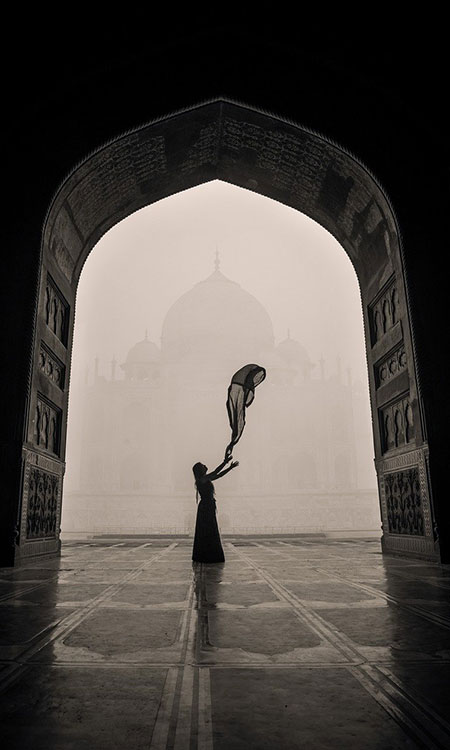
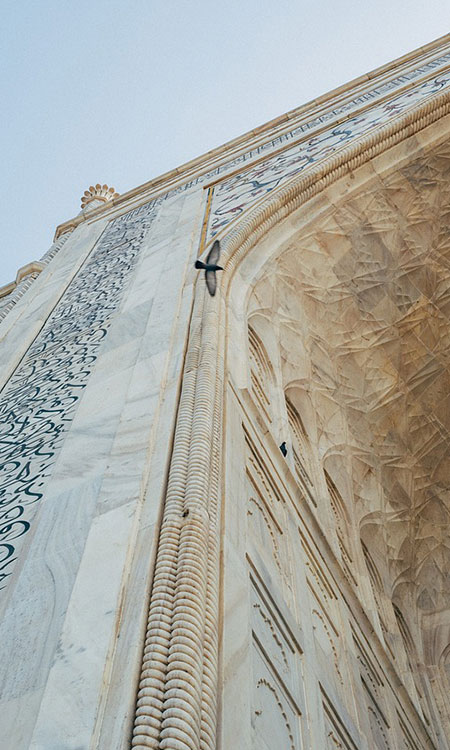
Construction of the Taj Mahal began in 1632 and took about 22 years to complete. Shah Jahan commissioned the finest architects, engineers, and craftsmen of his time to create a mausoleum of unparalleled beauty and elegance. The Taj Mahal is a perfect example of Indo-Islamic architecture and combines elements of Persian, Ottoman, Indian, and Islamic styles.
The mausoleum is primarily made of white marble, adorned with intricate inlays of precious stones. The symmetrical complex is complemented by a sprawling garden that surrounds the mausoleum and underscores the harmony of the structure. Particularly impressive is the dome of the Taj Mahal, which rises majestically above the structure and is flanked by four minarets.
The play of light and shadow, which changes on the marble throughout the day, lends the Taj Mahal an almost mystical aura. Especially at sunrise and sunset, the mausoleum appears in various hues, ranging from delicate pink to brilliant white. This spectacle underscores the symbolism of the Taj Mahal as an expression of both transience and eternity.
The Symbolism of the Taj Mahal
The Taj Mahal is far more than an architectural masterpiece. It is a symbol of the power of love and the human desire to leave behind something that endures beyond one’s own lifetime. With this monument, Shah Jahan sought to immortalize his undying love for his wife while also creating a spiritual legacy that inspires visitors to reflect on life and death.
The central dome of the Taj Mahal symbolizes the connection between heaven and earth, while the gardens represent paradise as described in Islam. Every stone, every ornament, and every architectural decision reflects the deep devotion and pursuit of perfection that Shah Jahan felt for his beloved Mumtaz Mahal.
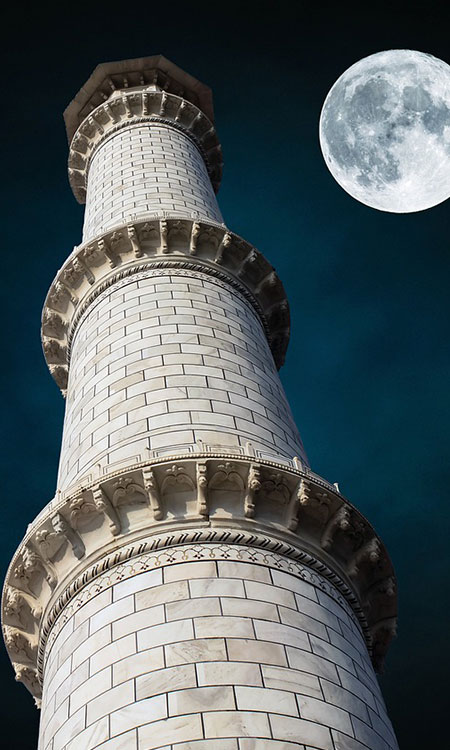
Eternal love in a fleeting world
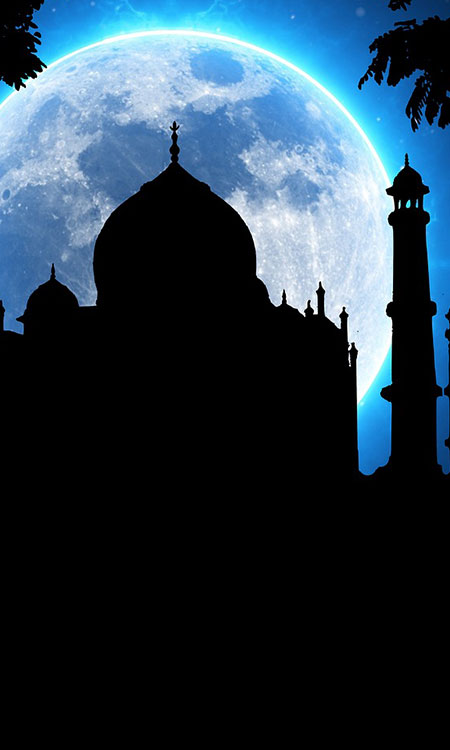
Since its completion, the Taj Mahal has inspired millions of people. It is a place of pilgrimage for lovers and a symbol that true love endures through time. Yet the history of the Taj Mahal also serves as a reminder that even the deepest affection is accompanied by loss and grief. The beauty of the structure is made all the more poignant by its tragic history.
The connection between love and eternity, which the Taj Mahal so powerfully represents, remains deeply meaningful even in our modern world. While the ways we remember have changed over the centuries, the need to preserve love and the memory of the person who walked beside us remains unchanged.
Memorial Diamonds: A Modern Expression of Eternal Love
In a world where the ways to preserve memories are becoming increasingly diverse, a new form has emerged that captures the idea of eternity in a striking way: memorial diamonds. These diamonds are created from the ashes or hair of a deceased person and offer a unique way to preserve the memory of a loved one forever.
The world’s leading company for memorial diamonds is Algordanza, a Swiss firm that has specialized in the production of memorial diamonds for over 20 years. The process begins with the extraction of carbon from the ashes, which is then transformed into a diamond under extreme pressure and high temperature. The result is a unique gemstone that is not only aesthetically pleasing but also carries deep emotional significance.
Like the Taj Mahal, which immortalizes the love between Shah Jahan and Mumtaz Mahal, memorial diamonds offer a way to preserve the bond with a loved one forever. Each diamond is as unique as the person it represents and can be worn as jewelry or kept as a keepsake.

It all comes full circle
The Taj Mahal and Algordanza’s memorial diamonds both symbolize the quest for immortality in a transient world. While the Taj Mahal is a monumental structure that preserves the love between two people for posterity, memorial diamonds are a personal expression of this eternal bond. Both forms of remembrance bear witness to humanity’s deep longing to endure beyond the limits of life.
In an age when material things are often fleeting, both the Taj Mahal and memorial diamonds remind us that true love and deep connections have the power to endure the test of time. They stand as testaments to the fact that memories of loved ones never fade, as long as we find ways to preserve them. The combination of traditional architecture and modern technology shows that the expressions of eternal love are as diverse as love itself.
Thus, the circle is complete between the historic Taj Mahal and Algordanza’s modern memorial diamonds: both are symbols of the enduring power of love, which inspires and moves us to look beyond the finitude of life.
Verwandte Beiträge
From ashes to light: Don Lanfranco Casali’s Memorial Diamond has …
The Significance of Funeral Rituals The Significance of Funeral Rituals …
The Cult of the Dead in Ghana: Coffin Art as …
The grieving process: stages and coping strategies Grief is a …